
FSO ‘25 Recap & Reflections on Being a Walk-on
By Jesse Ryno, GRP Row
On November 15th, GRP Row—and the rest of America’s high-performance rowing clubs—closed out the fall racing season at the Fall Speed Order (FSO). USRowing hosts this regatta each year on Mercer Lake in West Windsor, NJ. At first glance, athletes might huff at the infrastructure under which such an important senior regatta takes place; suburban New Jersey is unfortunately not one of the Seven Wonders, and USRowing knows it, because there are not even grandstands for spectators to watch from. In fact, there are no announcers, no livestream, not even a medal for the winner—the regatta is more reminiscent of Rocky and Apollo’s secret exhibition match at the end of Rocky III.
But this is exactly where I find beauty in the regatta. Just as Apollo and Rocky needed to learn for themselves who was the better fighter—without needing the world to witness it, instead carrying that knowledge quietly and proudly—the athletes and spectators at FSO attend for the pure appreciation of rowing.
Fall racing, with the exception of FSO, is a spectacle. Often the results are inconsequential in terms of collegiate or international rowing, and the courses and their distances vary widely. These races behave more like festivals under the guise of regattas, tinged with drinking, socializing, merchandise vendors, food trucks, pop-ups, live music, and endless sponsors.
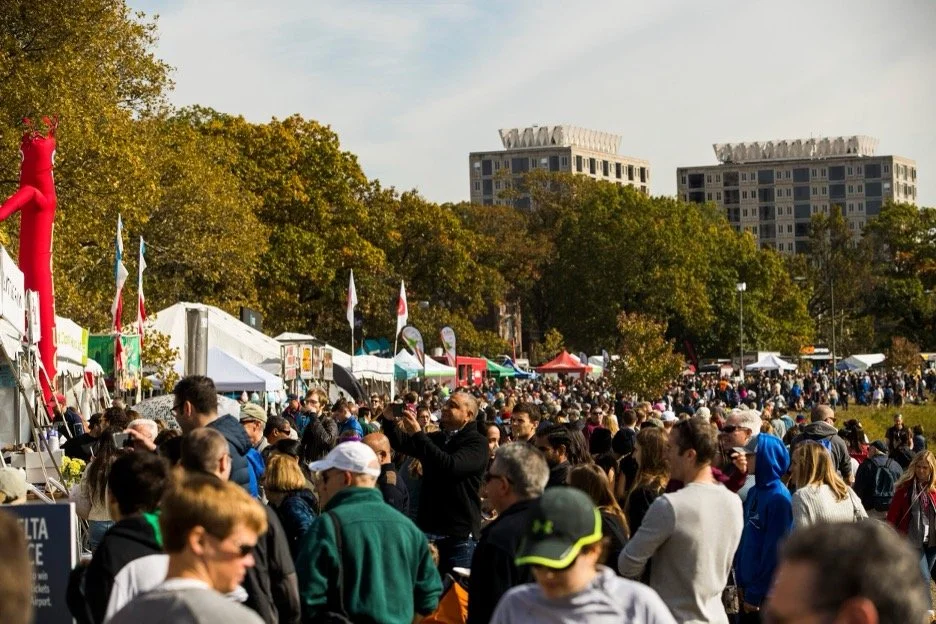
Head of the Charles Regatta festivities. Photo by Adam Glanzman, 2019.
Juxtaposed against all this noise is FSO, which strips the sport back to its elemental demand: move a boat across 2000 meters faster than the athletes beside you. In doing so, FSO becomes more than a regatta—it becomes a metaphor for rowing itself. The lack of frills mirrors the discipline of the sport, the monk-like focus required, the understanding that the real contest is internal long before it is external. It embodies the rowing spirit in its purest form: no media, no celebration, just the clarity of finding out exactly where you stand.
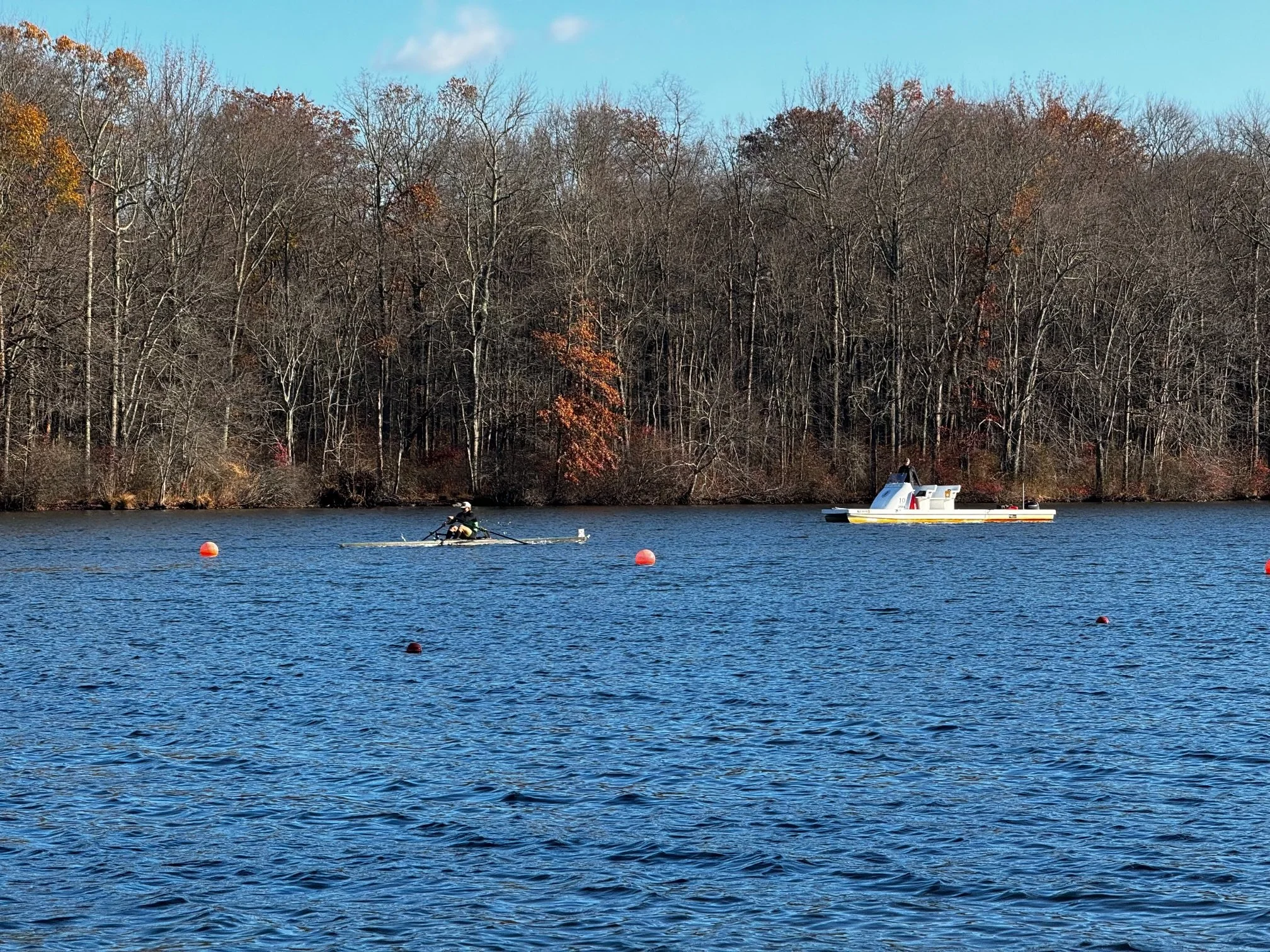
Meanwhile, the scene at the finish line of the 2024 Fall Speed Order.
Having traveled to FSO with GRP twice now (the first time being the fall of ’24), I think it is fair to say we have a much stronger team than last year. Not only do we have more athletes, but we have collectively inched further up the rankings. Also different from last year is that, rather than sending only singles, GRP sent two sweep boats: a men’s and a women’s pair. I raced the men’s pair with Quin Woods.
Quin and I only got to train together for a month or so—limited time to not only work out our own rowing kinks, but also to become familiar with each other’s stroke. As the saying goes in rowing, you want to be “easy to row with, and hard to row against.” The former determines the latter. Moreover, we did not have any other men’s pair to test our speed against, so it was almost as if we were going into this regatta blind: What is the standard? How do we compare?
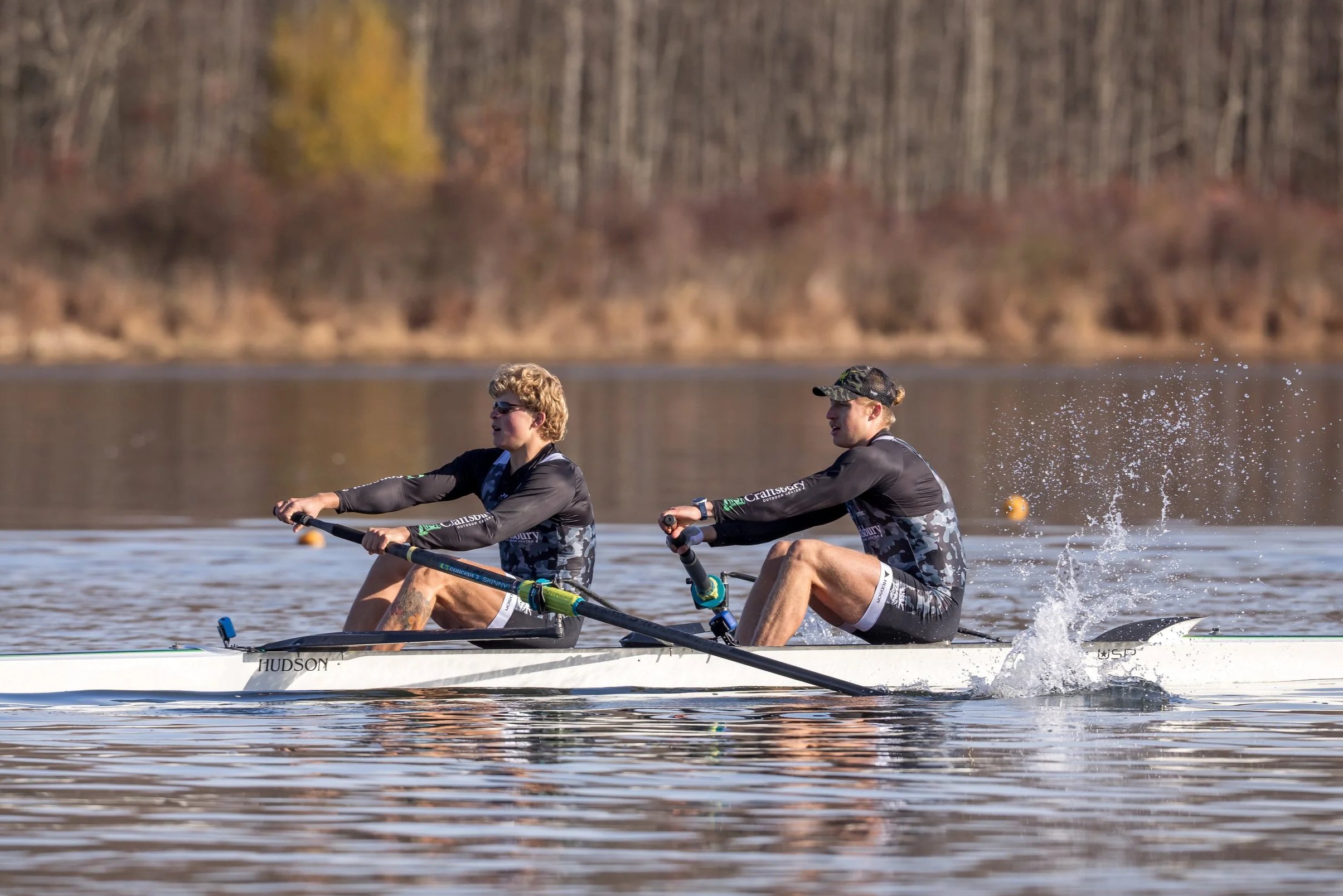
Jesse Ryno and Quin Woods racing the M2- time trial at Fall Speed Order. Photo by Row2k, 2025.
The regatta starts with a time trial, where the fastest seven boats are seeded into the A-final, crews eight through fourteen into the B-final, and so on. For Quin and me, the objective was clear: make the A-final at all costs. We placed fifth and did just that. With newfound confidence and big ambitions for the final only a few hours later, Quin and I unfortunately fell slightly short of our new goal: to move up to third or fourth place. While part of me felt saddened by the slight underperformance, Coach Hap’s post-race reflection reset our perspective. Rhetorically, Hap asked, “When was the last time a Georgetown guy or a Trinity guy A-finaled at a senior regatta!? Let alone in the same boat!”
Hap was touching on the historic athlete pipeline in our sport, where much of the country’s elite post-collegiate talent is siphoned from the same few powerhouse rowing institutions (the Ivies, plus Cal, Washington, and Stanford) and often recruited to them after years of elite youth rowing at prep schools. So, while much of our current competition was already racing for international medals at the U19 World Championships, neither Quin nor I had ever even picked up an oar during that time. We are both walk-ons at Trinity College and Georgetown University, respectively. As the two of us still ride out the remainder of our late learning curves, it will continue to be an uphill battle against our more experienced competition. But that will only last so long.
Often, being a walk-on feels like a disadvantage—sometimes I catch myself wondering what I might have already accomplished in the sport if I had just started with the rest of the field. Really, though, it is a superpower.
The idea of the walk-on athlete is iconic in American rowing. In fact, the leading piece of media surrounding the sport is The Boys in the Boat, the true story of a ragtag group of nine walk-ons at the University of Washington who become an Olympic gold-medal-winning crew. Today, that history is still invoked by many college coaches looking to fill out their rosters, field more boats, and drive the standard from the bottom up.
That mythos of the walk-on doesn’t exist by accident. Choosing to walk on to a college team with no prior experience says something unmistakable about an athlete’s wiring. It means they are pulled toward competitive environments, unbothered by the vulnerability of starting from zero, and certain that they can grow into a team that never recruited them. Once they enter full team practices, the ones without discipline fall away, and what remains is a particular kind of athlete: hardworking, competitive, fearless.
But there is another trait, rarely named yet central to a walk-on’s potential success: ignorance. True walk-ons begin with no understanding of the sport, and because the rowing stroke appears deceptively simple, they assume there isn’t much to learn anyway. My very first rowing coach told me, “Jesse, this is a sport where the hours you put in will directly correlate with your success.” For a walk-on, hearing that is liberating. Now, with no reason to believe otherwise, the walk-on sees only one barrier between first and last place: work ethic. Naturally, they find the fastest athlete on the team and chase them without hesitation.
Of course, other “barriers” to success do exist—physiology, height, limb length, emotional control, general athleticism—but the biggest barrier many rowers face is mental. Consider an athlete who started rowing as a high school freshman. At fourteen, they begin forming truths about the sport that will inevitably shift as their body and mind mature. They might spend years chasing a magic 2k time—6:20—for the sake of recruitment, and by the time they hit it, they’ve worked so hard to reach that milestone that going faster feels impossible. Yet when they arrive at their college boathouse, they learn that 6:20 is now considered slow.
The walk-on does not suffer from this ceiling. Consequently, they may spend their first few months overtraining—pulling unsustainably fast splits on the erg and charging through race pieces at a pace their physiology can’t yet support. But they see it as a gut check, not a physiological impossibility. The psychology of the walk-on is disarmingly simple: if the sport rewards hours, perfect—hours are something they can control. If the stroke is straightforward, even better—simplicity suggests mastery is within reach. Where others see complexity, a walk-on sees a clear, linear equation: I should be able to get this.
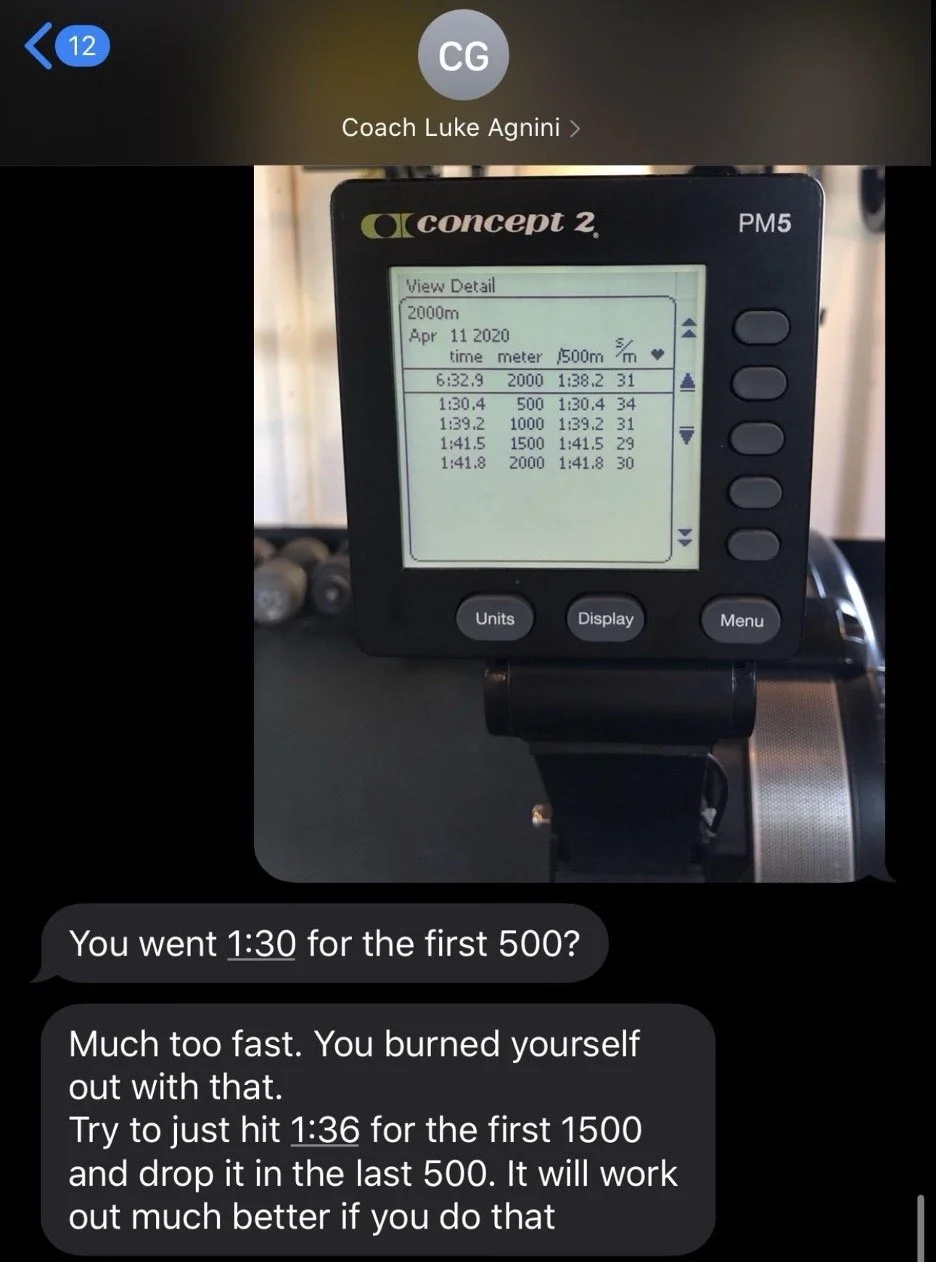
A text exchange with my college coach about my “fly and die” 2k pacing in April, 2020.
Over time, this evolves into something deeper: an identity built entirely around improvement. Walk-ons build a career on collecting inches—technical, physical, mental—and the accumulation of inches becomes their superpower. Recruited athletes may have a head start, but often they have never needed to orient their whole sense of self around the idea that I am someone who gets better. Walk-ons have. And once that identity calcifies, it becomes a competitive weapon.
Still, it’s worth acknowledging the reality of the sport at its highest level. Of the men sent to the 2024 Olympic Games for the United States, not a single one was a college walk-on. The pipeline is narrow, and the top is shaped by athletes who entered the system early and who grew up inside programs rich in institutional knowledge, deliberate development pathways, and constant internal competition. For someone like me—and like Quin—this can be both humbling and motivating. It reminds us that the climb is steep, but the ascent is that much more meaningful.
And that brings me back to FSO. Lining up against athletes who have been built for this since they were teenagers, Quin and I weren’t just racing the field—we were racing a timeline. We were racing years we didn’t have in the sport, years we are trying to catch up to every single day. Making the A-final wasn’t merely a placement; it was a small confirmation that the walk-on trajectory—full of ignorance, simplicity, and a nothing-to-lose posture—has not been a deficit; it has been an accelerant.
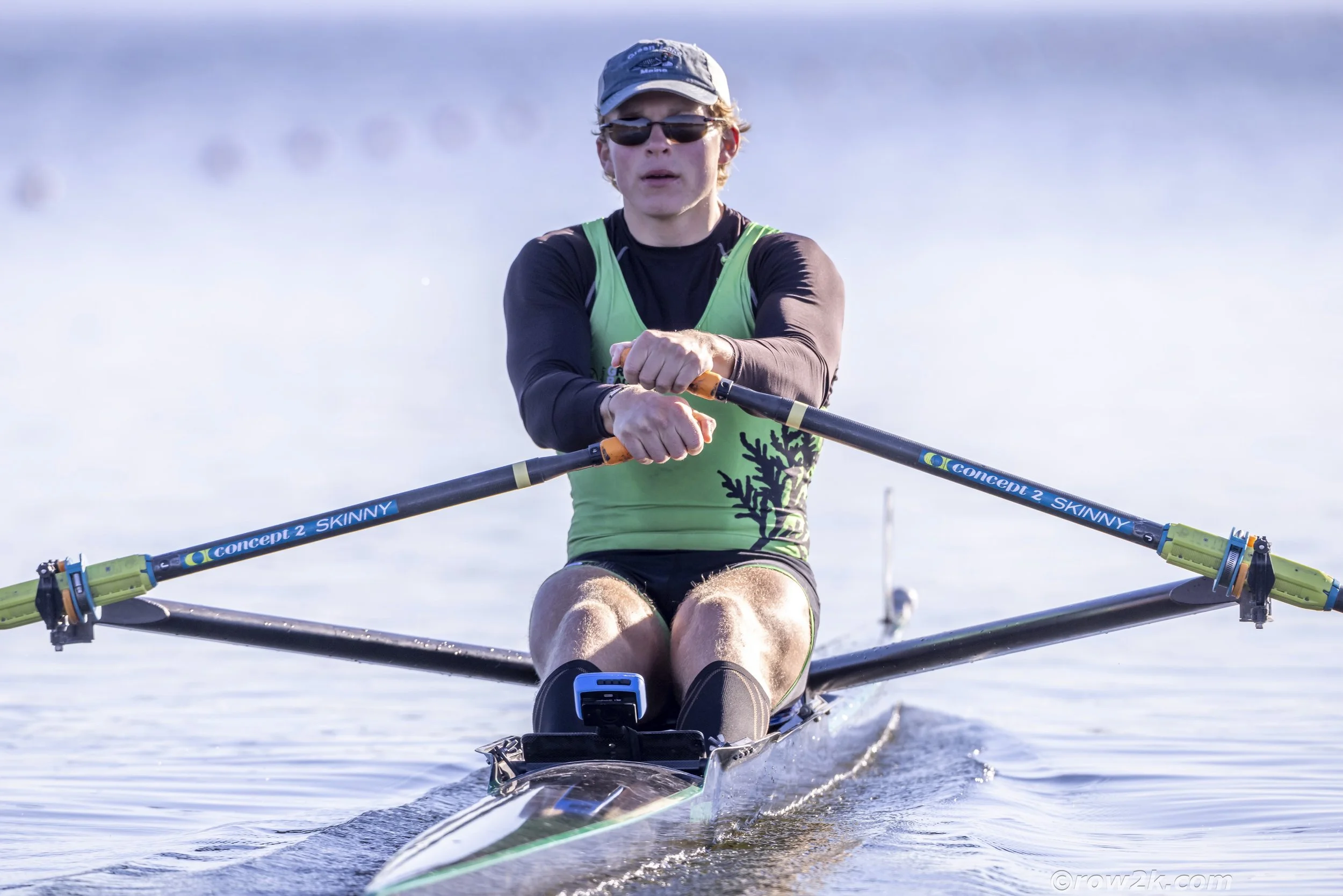
The start of my final at the 2024 Fall Speed Order. Photo by Row2k.
In the end, being a walk-on is not about where you start, rather it is another lens through which to experience the sport. It’s about entering a world you were never supposed to belong to and deciding—quietly, stubbornly—that you’re going to belong anyway. It’s about holding the belief that time, attention, and grit can narrow any gap, even if the gap is years wide. And for athletes like Quin and me, FSO was not just a checkpoint on a season’s timeline; it was evidence that our path, while unconventional, is every bit as potent. Maybe there were no medals, no grandstands, no spectacle. But that’s exactly what made it perfect. The only thing reflected back at you on Mercer Lake is the truth of your speed and the truth of your ambition—and for two walk-ons still climbing, that truth is more than enough. To circle back to my first FSO appearance, Coach Hap sent me off the dock with his notorious pre-race Spartan handshake and the words, “Do it for the whole history of walk-ons before you.” Those words can never lose their meaning; I am forever a part of that heritage.