
GRP Ski: Jack Young’s Tour de Ski Experience
The Tour de Ski is a challenging event on the FIS World Cup circuit with 6 races over 8 days at 2 different venues in a tour format. Skiers accumulate a total time back from the tour leader depending on their performance in each race. While the overall competition seems to be set up for all-rounders (athletes who can get top results in both sprint and distance races across both skate and classic) there is still something for everyone with no 2 races being the same format. GRPer Jack Young, a sprinting focused athlete, competed in 5 of the races over 7 days, just sitting out the final 10k hill climb. This was his 2nd Tour de Ski appearance.
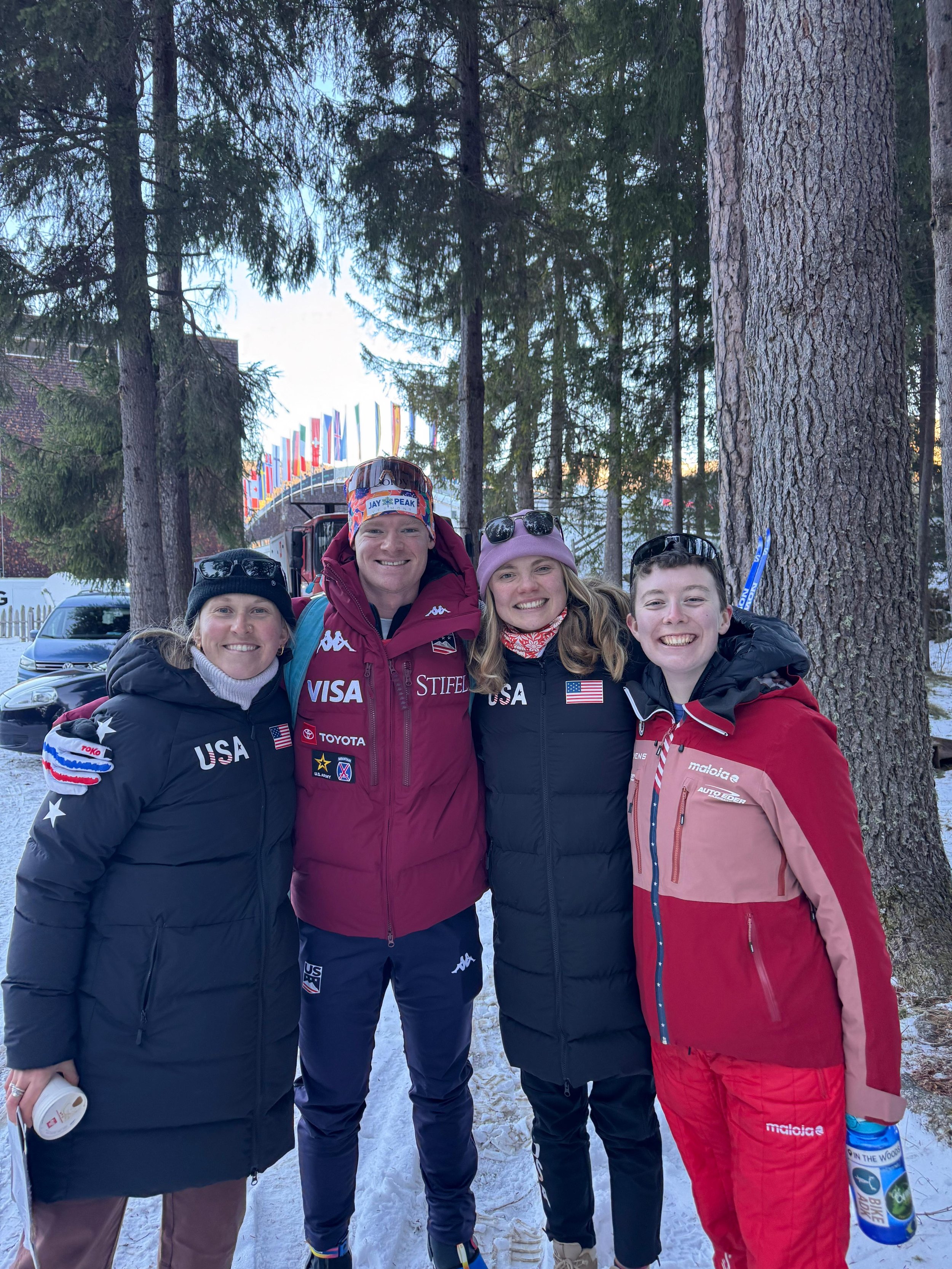
GRP biathlon teammates cheered on Jack in the skate sprint during the Tour de Ski.
Races and results
Toblach:
Dec 28: Skate sprint qualification (25th place, +4.84 seconds), final (19th place after heats)
Dec 29: 10k classic results (93rd place, +2:57)
Dec 31: 5k skate heat mass start results (42nd place, +13.7)
Jan 1: 20k pursuit classic results (80th place, +8:07 total (in total Tour time))
Val di Fiemme:
Jan 3: Classic sprint qualification (53rd place, +12.49), final
Jan 4: 10k skate hill climb results (DNS)
Interview
GRP biathlete Luke Brown caught up with Jack to learn more about his experience:
LB: What were your main goals heading in to this year’s tour and how did they play out? How were you thinking about targeting different stages for top results vs. just surviving others?
JY: My primary goal coming into this year’s Tour de Ski was to qualify for heats in the classic sprint in Val di Fiemme (Stage 5). I was also targeting the skate sprint and the skate 5k heat start. The classic sprint was most important because it was on the Olympic course and performance on that day will be weighed when the coaches determine who starts that race at the Olympics. This leaves three races: 10k classic intervals start, 20k classic pursuit, final climb. In individual starts, an athlete will be cut from the tour if they finish more than 20% back from the winner. In pursuits and mass starts, an athlete will only be cut if they are lapped. This left me with the conundrum of skiing fast enough to continue the Tour while not expending unnecessary energy. For the 10k classic, this meant racing it as hard as possible. I was not worried about being more than 20% back, but if anything went wrong, I would have been in trouble. On the other hand, I could approach the 20k classic as more of a threshold+ effort (I wasn’t at risk of being lapped at any point). I think I executed the leadup to the classic sprint, and I was happy to qualify in the skate sprint, but sadly, things didn’t pan out for me in the classic sprint itself.
LB: What were your favorite days on this year’s tour? Can you share some of your ups and downs during this year’s Tour that must be inherent to this type of intense racing schedule?
JY: My favorite day during the tour was the 5k heat start. That was simply a fun race format. The racing was fast, intense, yet still tactical. Even though I had a ton of fun, this race came with a price. I had already developed an intense race cough after the skate sprint, and the 5k exacerbated this. I didn’t really get this under control before the classic sprint, and this made it much worse. This year’s Tour on paper was very easy, but the repeated short, intense effort actually ended up making this year’s Tour challenging in a unique way. By the way the athlete area sounded after the classic qualifier, I was not the only athlete struggling with a race cough.
LB: This was your 2nd Tour de Ski - you had competed in the TdS last year in the middle of balancing college racing and World Cup starts. How did this year compare to last year for you? Did you feel more prepared for the event based on your experience last year?
JY: On paper, this year should have been easier for many reasons. The format was shorter with less races, I am done with school and no longer have to balance that aspect of my life, and I have a year more of World Cup experience. In practice, this year was much harder. There are a couple of reasons this may have happened. I trained less volume overall this year than I did last year. This, coupled with hitting the Christmas training block a little bit harder than last year could have made me a little bit more tired than I expected with less of a base to handle the load. I also think that the shorter, more intense format of the Tour was sneaky hard. It may not have been a lot of kilometers, but having three sprint-like efforts over the course of six days was taxing.
LB: If you get to race the TdS again next year, what would be your advice to your future self?
JY: I aim to not start the Tour next year, but the next time I race the Tour, I hope to be attacking the distance races as well as the sprints. If my long term career plan proceeds by the best case scenario, I will eventually be able to use the Tour as a proving ground for my distance skiing once I put more energy into that side of my skiing.
LB: Is there anything else that you think our readers would be interested in hearing about the event or your experience that might not have been obvious just by watching from the outside?
One interesting thing about this year's Tour is the nutrition. Again, on paper, this Tour was short and easy, but by my personal experience, I think the challenge of eating enough was as great if not greater. I may not have been burning as many calories during the actual races as last year, but as the intensity gets higher, the more stressed your body is while not racing. In the end, I think I was expending nearly as much energy overall as last year, but the higher intensity of the races made it harder to eat. Again, this is just my personal experience, but I think it’s worth noting.